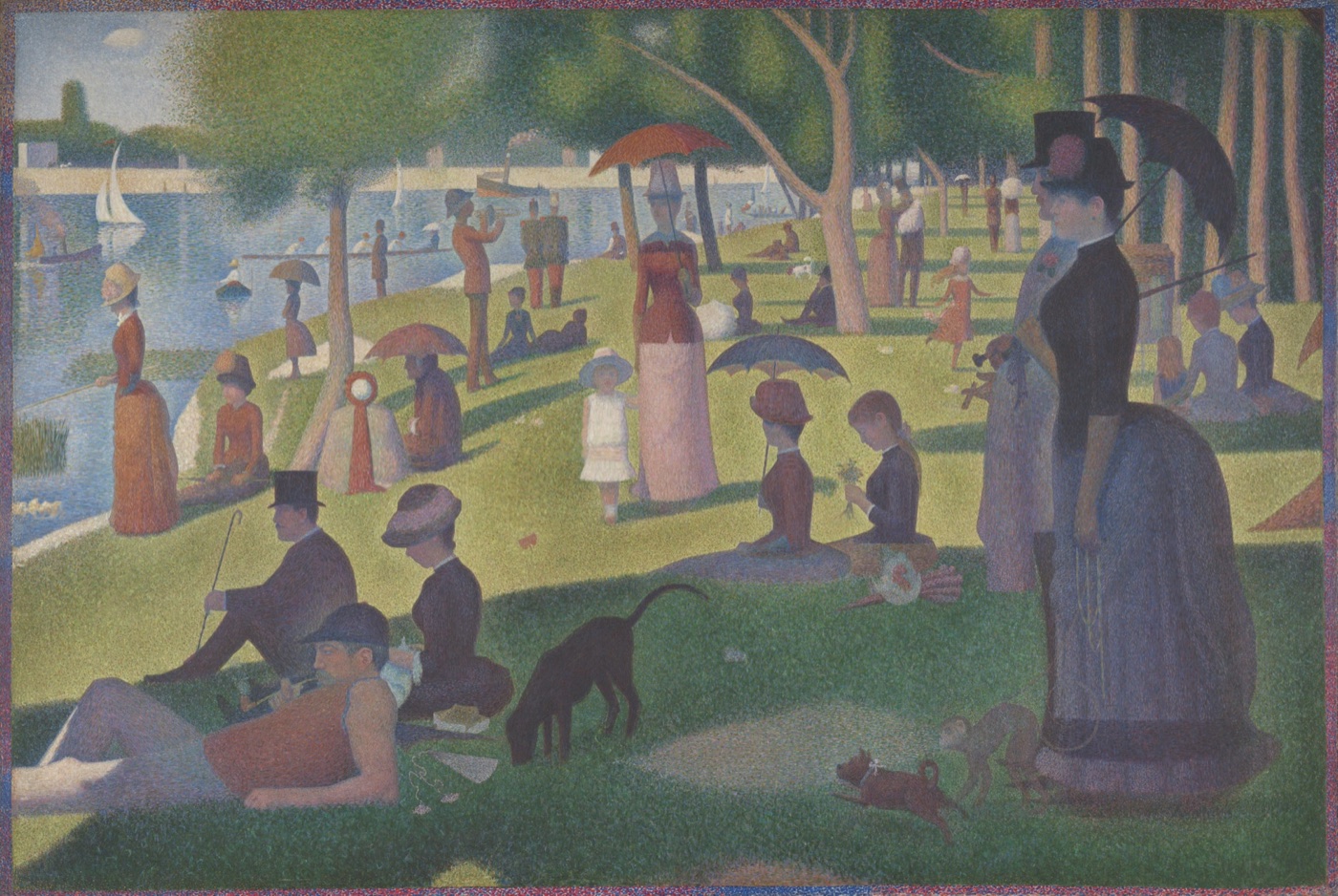
Amdahl’s Law After Georges Seurat
Can you beat
the clock?
A painting, a deadline, and sixty-four very eager helpers.
The brief / Set the pace
First, see how long one painter takes.
The study has to be ready before anyone can add color.
The idea behind the game
Some work can be shared.Some work makes everyone wait.
Each painter can take a separate patch of the canvas. Add painters, and that part gets faster. But first, someone has to make the study they’ll follow. Everyone waits for it.
That’s Amdahl’s Law. If of a job can be shared among workers, its speedup is . As you add workers, the part that cannot be shared becomes the limit.
Waiting is not free. Each painter is paid from the moment the clock starts, so doubling the crew always adds the new painters’ wait to the bill. Idle cores still draw power, and people blocked on one review still draw a salary.
The small panel changes the job. You make a quicker study, then the painters share the work of transferring it to the canvas. In software, the same move might mean shortening a build step or splitting a task that once had to run alone.
- One painter
- 13.0 s
- Best panel plan, 64 painters
- 0.98 s
- That’s
- 13× faster