Parkinson’s Law After Salvador Dalí
went soft.
One postcard to send. Give it three minutes, or give it the day, and see what the extra time buys.
Parkinson’s Law
The time was neverthe size of the job.
It is a commonplace observation that work expands so as to fill the time available for its completion.The Economist, November 19, 1955. Unsigned, by C. Northcote Parkinson.
Parkinson was a professor of history at the University of Malaya, in Singapore, and his essay was a joke with tables in it. The postcard is his. An elderly lady with nothing else to do spends an hour finding the card, another hunting for her spectacles, half an hour on the address, an hour and a quarter composing, and twenty minutes deciding whether to take an umbrella to the pillar box in the next street. A busy person, he says, would give it three minutes all told.
The law he meant
The sentence about work filling time was only his way in. The law he went on to state is about staff. The number of officials, he said, grows by between 5.17 and 6.56 percent a year, “irrespective of any variation in the amount of work (if any) to be done.”
He gave two reasons. An official wants to multiply subordinates, not rivals. And officials make work for each other. His example is an official called A, who feels overworked. Sharing the job with a colleague would create a rival, so A asks for two juniors. In time each of them needs two more. “Seven officials are now doing what one did before,” and because they draft, amend and sign off each other’s papers, all seven are busy and A is working harder than ever.
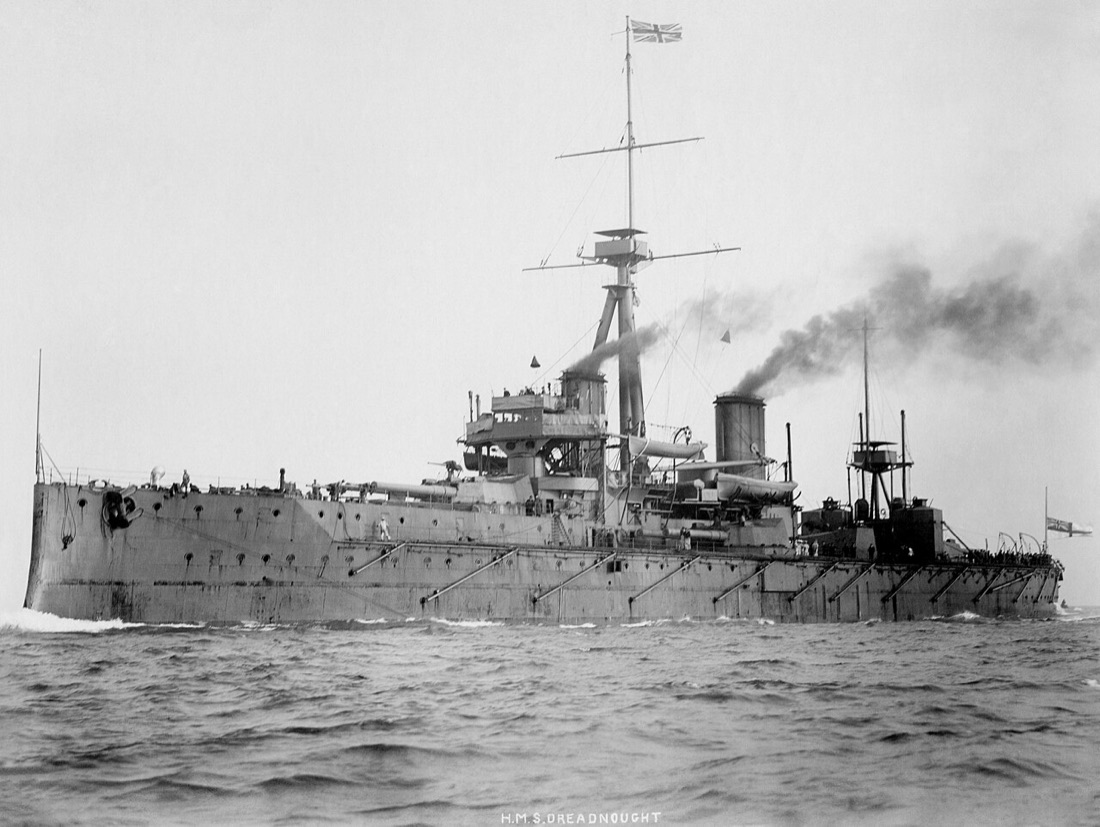
The figures in the room are his Admiralty table. Between 1914 and 1928 the navy lost two thirds of its capital ships and a third of its men, while the Admiralty’s own staff grew by 78 percent. People at the time called it “a magnificent Navy on land.” His second table is the Colonial Office: 372 officials in 1935 and 1,661 in 1954, by which time the empire was getting smaller every year.
Does it hold up?
For a single task, fairly well. In 1967 Judith Bryan and Edwin Locke gave one group twice the time an addition task needed and another group just enough. The group with time to spare took longer. The same year Aronson and Landy gave people either five or fifteen minutes for a five-minute task; those with fifteen spent more of it working, and were slower when the same task came around again. In a 1999 study, students who heard that a later batch of work had been canceled slowed down on the batch in front of them.
The breaking point in the room is real too. Parkinson’s law describes the gap between what a job needs and what it is given. It stops applying once the time drops below the size of the job. In a diary study of 177 employees, Teresa Amabile and her colleagues found that on the most time-pressed days people were 45 percent less likely to think creatively, and the effect lasted two more days. People also tend to guess low about their own work, which is the planning fallacy. So a deadline shorter than the job doesn’t fix a soft one.
In software
- Give the time first. Ask how long a feature will take and it will take at least that long. Basecamp’s Shape Up turns the question around: decide how much time the problem is worth, then fit the design to it. They call it fixed time, variable scope. The idea is older than agile. A DuPont spin-off was building software in “timeboxes” by 1988.
- Pool the padding. If every task carries its own safety margin, every margin gets used. Work that finishes early is rarely handed on early, and work that runs late always is. Eliyahu Goldratt’s Critical Chain cuts the task estimates and keeps the safety as one buffer at the end of the project, where everyone can see it being spent.
- Find the size by cutting. You found three minutes by taking time away until the card stopped going out, then backing off. A short, real deadline does the same for a feature. It shows which parts were the job and which were the umbrella.
- Count the staff separately. Headcount and workload are different numbers. A team that has doubled is busy almost by definition, because its members brief, review and wait on each other. That everyone is busy doesn’t show the work grew.
The picture
Salvador Dalí painted The Persistence of Memory in 1931. It is small, nine and a half inches by thirteen, and belongs to the Museum of Modern Art in New York. It has three soft watches and a fourth, closed and copper-colored, with ants swarming over its case. The museum reads Dalí’s ants as a sign of decay.
In his memoir Dalí says the landscape was already painted. One evening he stayed home with a headache while Gala went to a movie with friends. He sat thinking about the very strong Camembert they had finished dinner with, went to look at the canvas before bed, and “saw” two soft watches, one hanging on the branch of the olive tree. He set to work, and when Gala came home two hours later the picture, he writes, “was completed.”
The room simplifies. Parkinson lists five items for the old lady’s day that add up to four hours and five minutes; how the padding grows between three minutes and that day is ours. He gives the Admiralty at two dates, 1914 and 1928; the years in between are animated, not counted. The painting is still in copyright, so the stage is our own drawing after it.