After John Tenniel
She Wrote to Her Own Feet
Wonderland, 1865. Picture Alice as a small program that does one thing well. Four regulars visit her every day, and each has brought a cake. Every cake says EAT ME.
Zawinski’s law
People live where they talk.Programs follow them there.
Every program attempts to expand until it can read mail. Those programs which cannot so expand are replaced by ones which can.Jamie Zawinski, the Law of Software Envelopment
Jamie Zawinski was responsible for the Unix versions of Netscape Navigator through release 1.1. Then he designed the Netscape Mail and News clients for versions 2.0 through 3.0 and built them with Terry Weissman. On his Netscape homepage, in a copy saved on June 14, 1997, he called that work their “contribution to the proof of the Law of Software Envelopment.” The joke underneath is older. In 1989 a line was going around MIT: “Every program in development at MIT expands until it can read mail.”
People quote the law at every copied feature, and he has said that misses his point. In November 2020 he wrote: “My point was not about copycats, it was about platformization. Apps that you ‘live in’ all day have pressure to become everything and do everything. An app for editing text becomes an IDE, then an OS. An app for displaying hypertext documents becomes a mail reader, then an OS.”
Forty years of learning to read mail
- 1985. GNU Emacs 13, the first public release, is dated March 20, 1985. It already shipped Rmail.
- 1996. Netscape Navigator 2.0 came out in early February with mail and news built in.
- 1997. Netscape Communicator shipped in June as five programs in one, announced as “the integrated client software product that users need every day to communicate.”
- 2003. Opera 7 added its M2 mail client on January 28.
- 2010. Facebook started giving its users @facebook.com addresses on November 15. “This is not an email killer,” Mark Zuckerberg said.
- 2013. Instagram Direct arrived on December 12.
- 2023. Google’s Bard could read Gmail from September 19, and Strava added messaging that December.
- 2025. Notion Mail and Claude’s Gmail integration both launched on April 15. Spotify added messages on August 26.
And then the cards come apart
The second half of the law runs in both directions. Mozilla 1.0, released June 5, 2002, was “a web browser, an email reader and a chat client.” On September 23 the browser that became Firefox shipped by itself as Phoenix 0.1, and the Phoenix release notes said: “Phoenix doesn’t include the kitchen sink and it never will.” Firefox 1.0 followed on November 9, 2004, and Thunderbird 1.0, the mail half, on December 7.
Spotify took its inbox out in 2017 for “very low engagement” and put messages back on August 26, 2025. Jim Barksdale, Netscape’s chief executive, later recalled telling a ballroom of British bankers on the 1995 roadshow: “Gentlemen, there’s only two ways I know of to make money: bundling, and unbundling.”
What to do with the pull
- Know whether you are a place or a tool. If people keep your program open all day, they will ask it for messages. Plan for that before the requests arrive one cake at a time.
- Answer with a door before you grow a neck. A share link, an email notification, a clean export or a webhook brings the mail to people where they already read it.
- Grow in cards, not cake. Keep each feature a separate piece with its own switch and its own owner, so the suite can be split apart again when it gets too heavy.
- Notice when you mostly write to yourself. Digests, reminders about reminders and “you have new notifications” are a program writing to its own feet.
Carroll kept a register
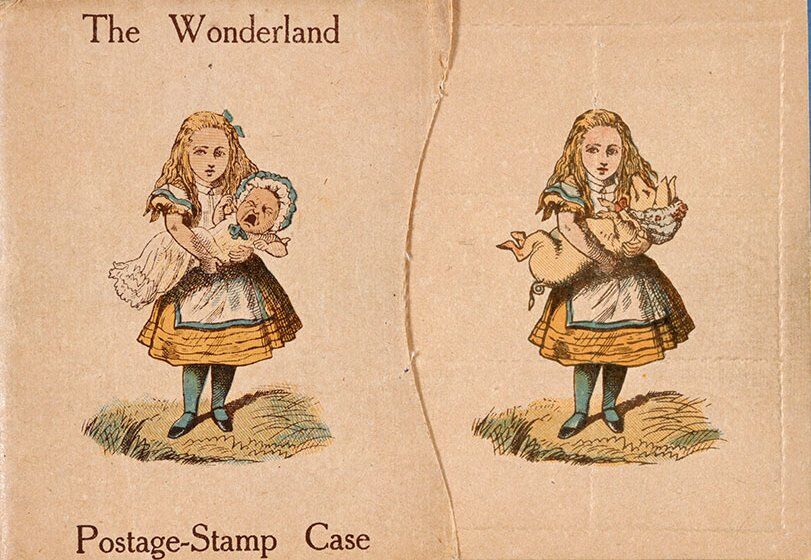
Lewis Carroll answered his mail with a system. From January 1, 1861 to January 8, 1898 he summarized every letter he wrote or received in a numbered register, and the last number in it is 98,721. That counts letters in and out, not letters written. He also designed the Wonderland Postage-Stamp Case, marked 1889 and sold from 1890 by Emberlin and Son of Oxford with a booklet, Eight or Nine Wise Words about Letter-Writing. Its sales pitch could have been written for this room: “Imitations of it will soon appear, no doubt.” In the end, Alice herself grew until she could hold the mail.
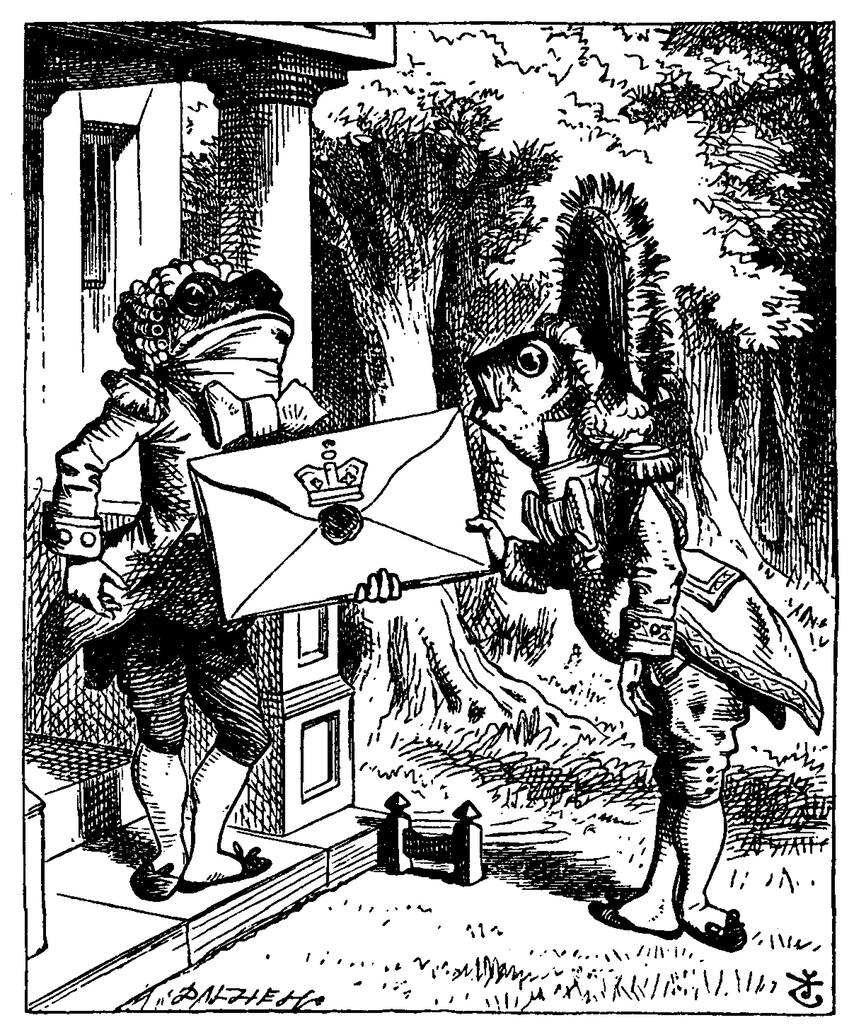
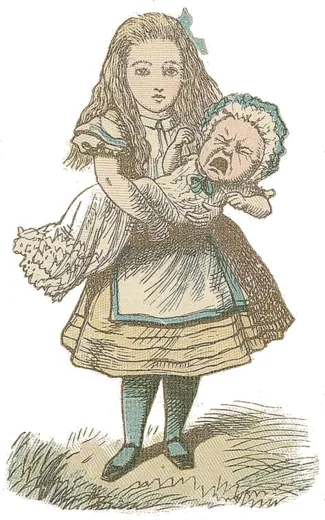
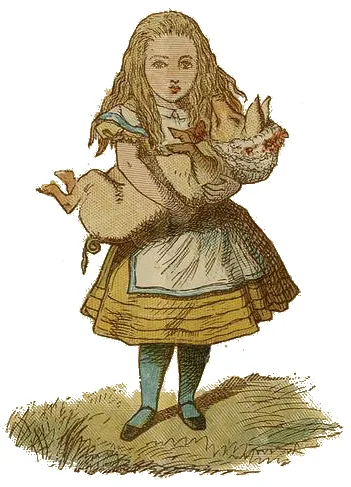
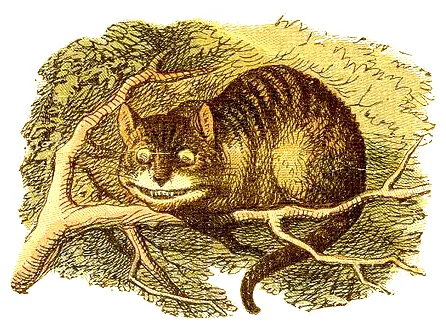
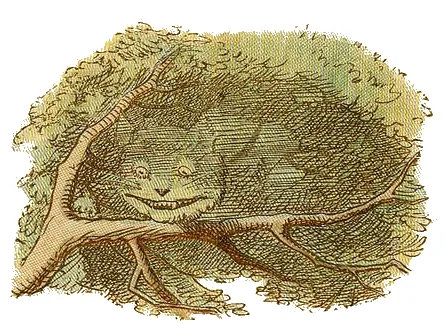
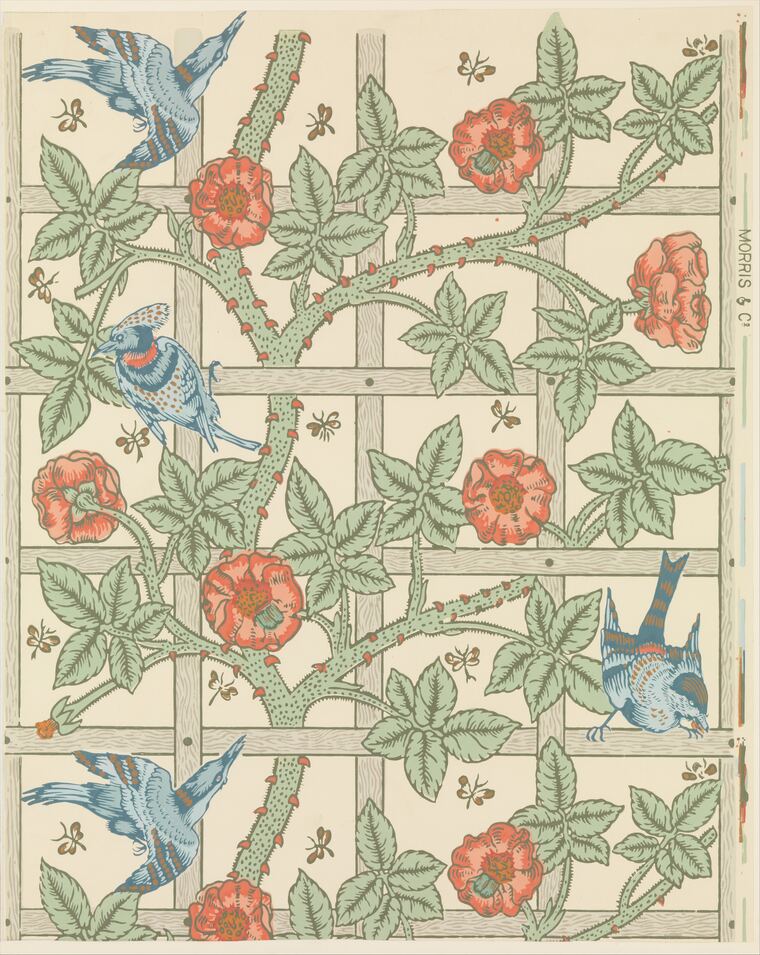
The figures on the stage are John Tenniel’s wood engravings for Alice’s Adventures in Wonderland (1865), cut on boxwood by the Dalziel brothers and cut out here the way a toy theater sheet was meant to be. The telescoping Alice is his picture for chapter II, and the pack of cards is the last picture in the book. The wallpaper is William Morris’s Trellis (1864).